
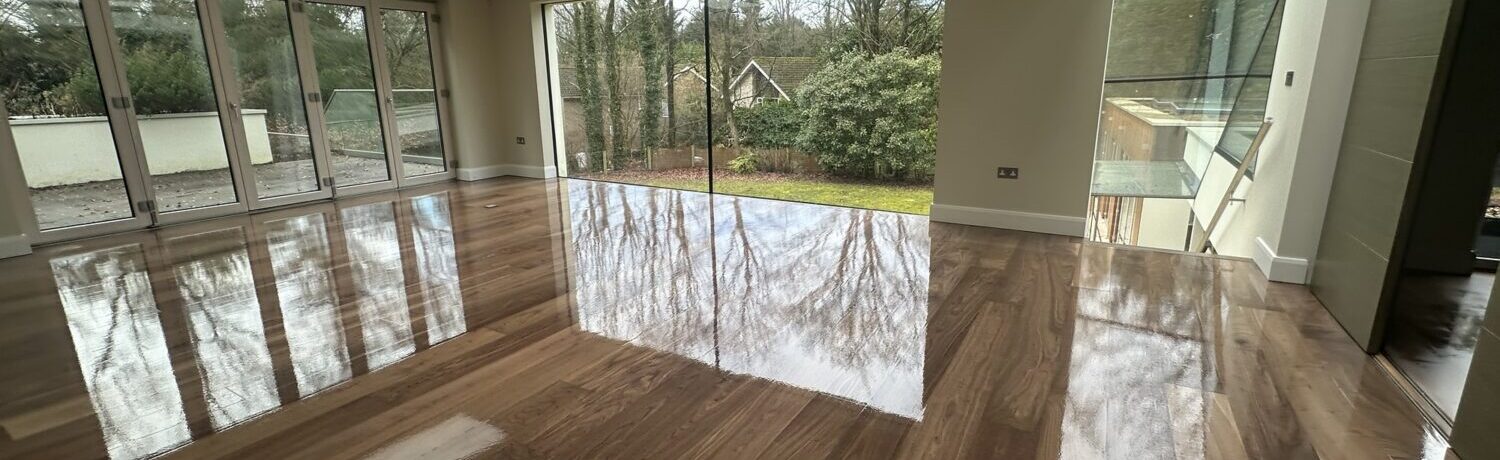
This walnut engineered wood floor sanding project in Welwyn Garden City is one I have been keen to write up. It was a unique floor in a beautiful property, and the results speak for themselves.
The floor was stunning, and the property was stunning. But the floor had a serious problem.
The damage – UV and what it actually does to wood
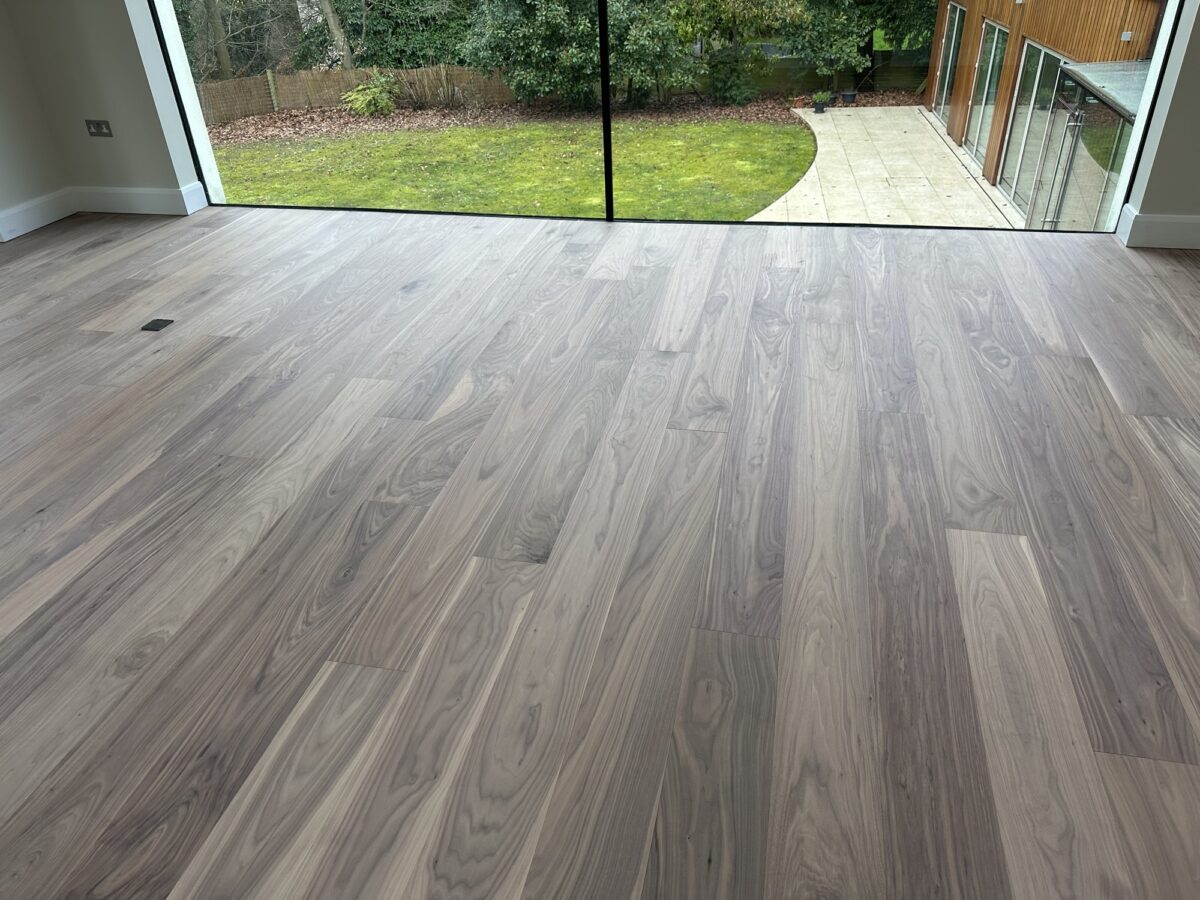
As you can see from the pictures, the floor was in a bad way. A wall of huge glass windows had hammered it with UV light over the years, leaving it bleached and worn looking. It is one of the worst cases of UV damage I have seen on an engineered floor.
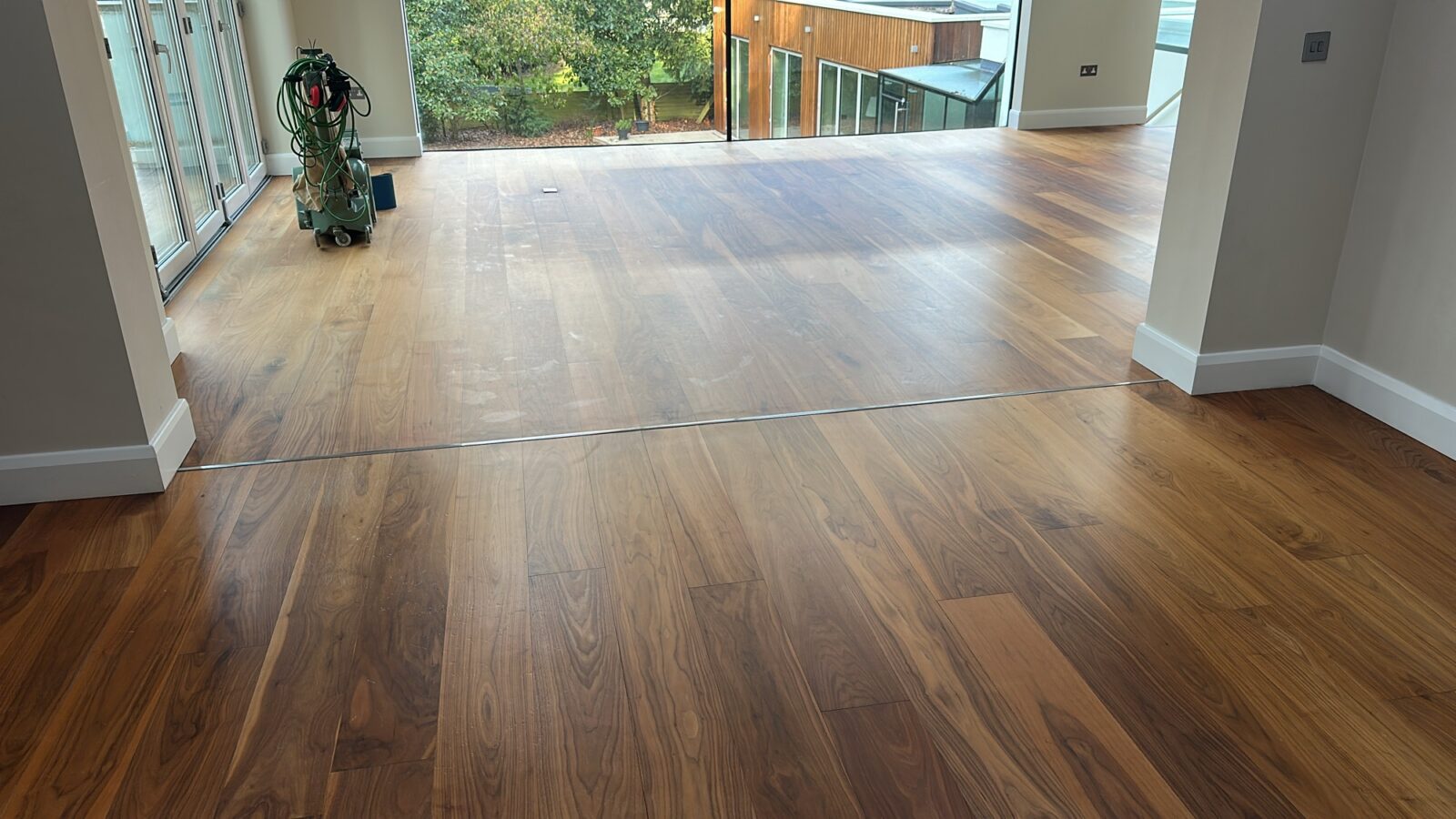
UV damage is something worth understanding if you have a timber floor in a sunny room. It is not just surface discolouration. UV light penetrates into the wood itself, so a light sand will not shift it. You need to remove enough timber to get back to clean, undamaged wood. In practice that usually means taking off around a millimetre, which sounds small but needs doing properly across every inch of the floor. Skip any area and the damage shows straight through the new finish.
This floor had a 6mm wear layer, which is good. It had been sanded once before, but around 5mm of that wear layer remained. We had plenty to work with, which is not always the case with engineered floors that have had previous work done.
The sanding process – stripping back to bare wood
We started on 40 grit. A floor with dents, scratches, worn patches and deep UV damage needs an aggressive grit. Starting too fine just means repeating passes and wasting time.
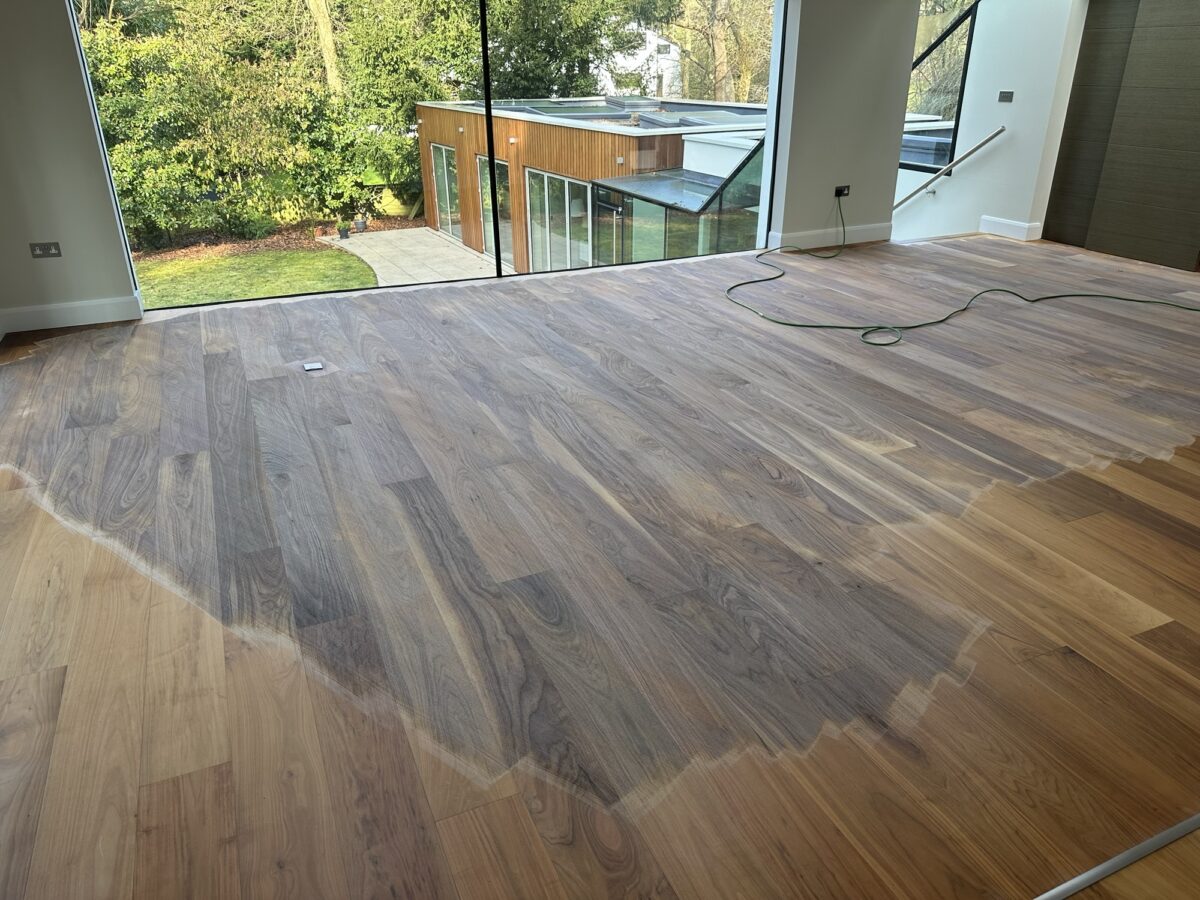
We ran the 40 grit through three times. First with the Lagler Hummel belt sander on the main floor area. Then with the Lagler Flip edge sander around the perimeter. Then with a corner tool to get into the tight spots. The floor also had a few fixtures set into the boards – lights and sockets – so those needed careful work around them.
By the end of that process the whole floor was back to bare, fresh walnut. That moment when the UV damage disappears and the real colour of the wood comes through is always satisfying, and on a walnut floor it is particularly striking.
Climbing the grits
Once you have a clean surface, sanding and refinishing engineered wood floors is about working up through the grits gradually. We moved through 60 grit and then 80 grit, each pass removing the scratch marks left by the one before and leaving the surface smoother and more even.
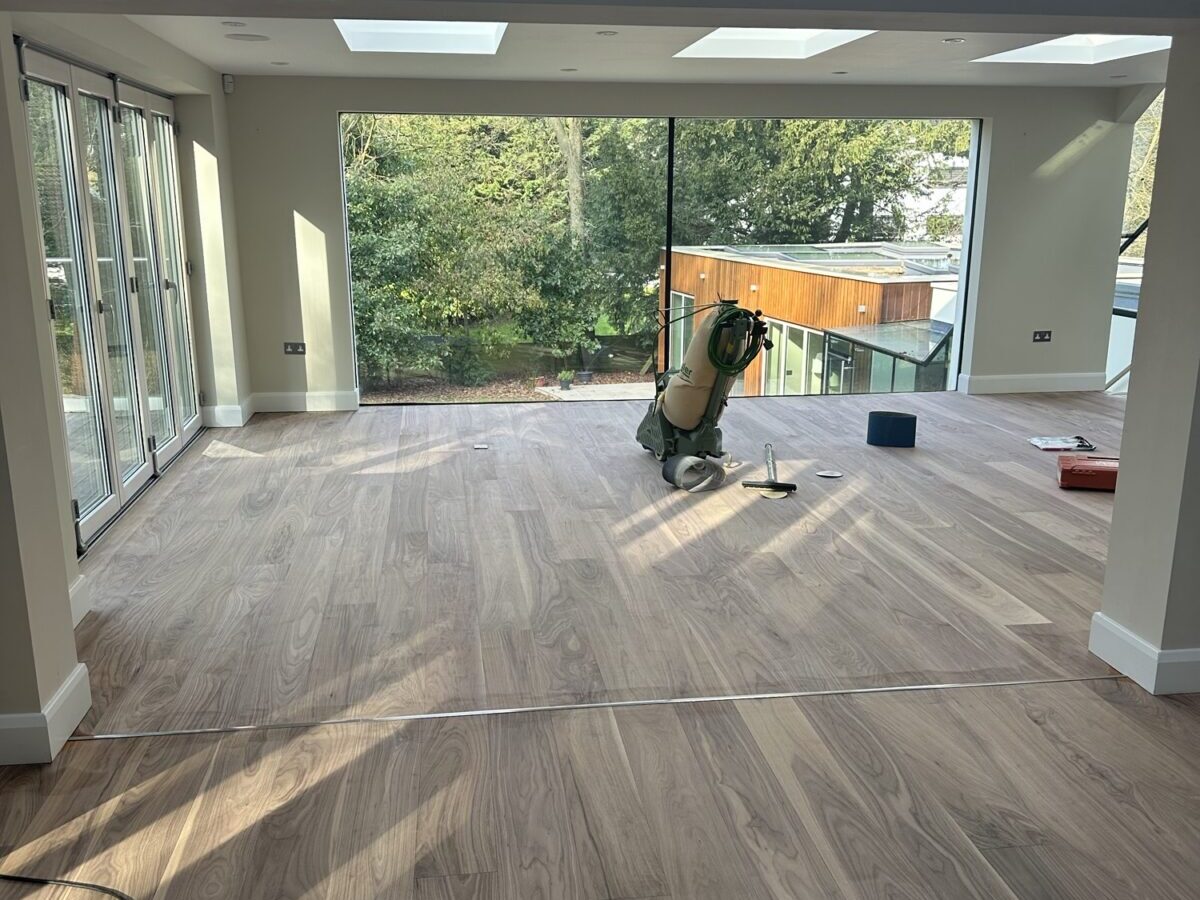
Rushing this stage is a mistake a lot of people make. Jump too far ahead in the grit sequence and you carry scratches forward that show up under the finished lacquer. Take your time and the finishing stage becomes much more straightforward.
At 80 grit the floor is clean and smooth, but it is not ready for finishing yet. That is where most people’s understanding of floor sanding stops, and where the next stage comes in.
Finishing sanding – the part most people don’t know about
Most people know what a drum sander and an edge sander do. Far fewer people know about finishing sanders, and they make a real difference to the final result.
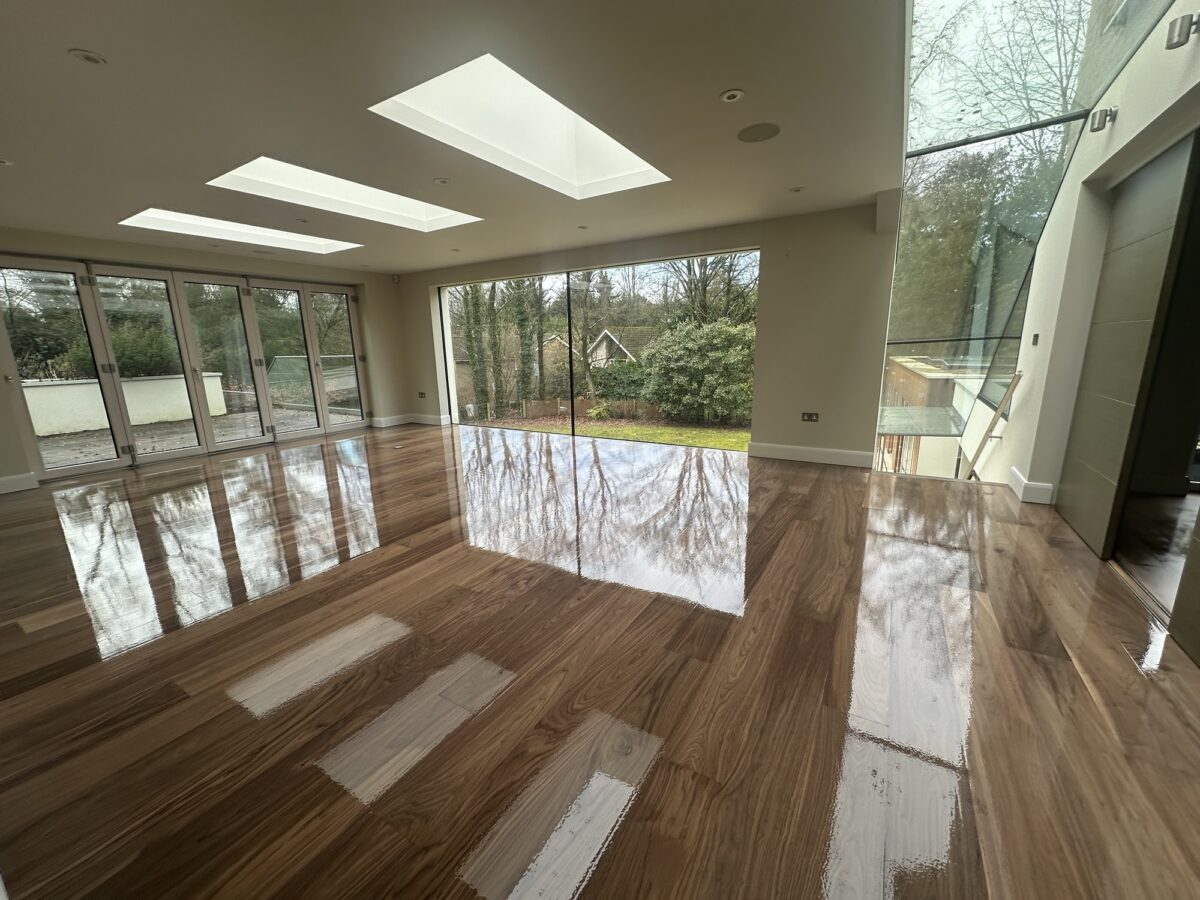
The belt sander and edger do the heavy lifting. They cut through the old finish and damaged wood and get you to a clean surface. But they also leave their own marks. The finishing sanders come in next. Their job is to flatten and smooth the floor to what we call a finish-sanded surface – the level of preparation you need before any lacquer goes down.
We use the Lagler Trio on the main floor area, running it on 100 grit and then 120 grit. Around the edges we use the Festool Rotex on 100 grit. Together they leave the floor flat, consistent and properly ready for finishing. The difference between a floor that has had finishing sanding and one that has not is visible in the final result, particularly in raking light.
Choosing the finish – why we went water-based
Solvent-based primers work very well on hardwoods. They penetrate well and give strong adhesion. On this job though, we chose a water-based primer instead.
The reason comes back to UV. Water-based finishes offer better UV stability than solvent-based ones. On a floor that sits under this much natural light, that matters. The last thing you want is to do all that restoration work and then apply a finish that offers less protection against the very thing that caused the damage in the first place.
We used Loba EasyPrime for the primer coat and Loba Easy Finish for the top coats. Loba products perform consistently well on engineered wood and this combination gave us exactly what we wanted. The finish is durable, attractive and well suited to a floor in a high light environment.
The result
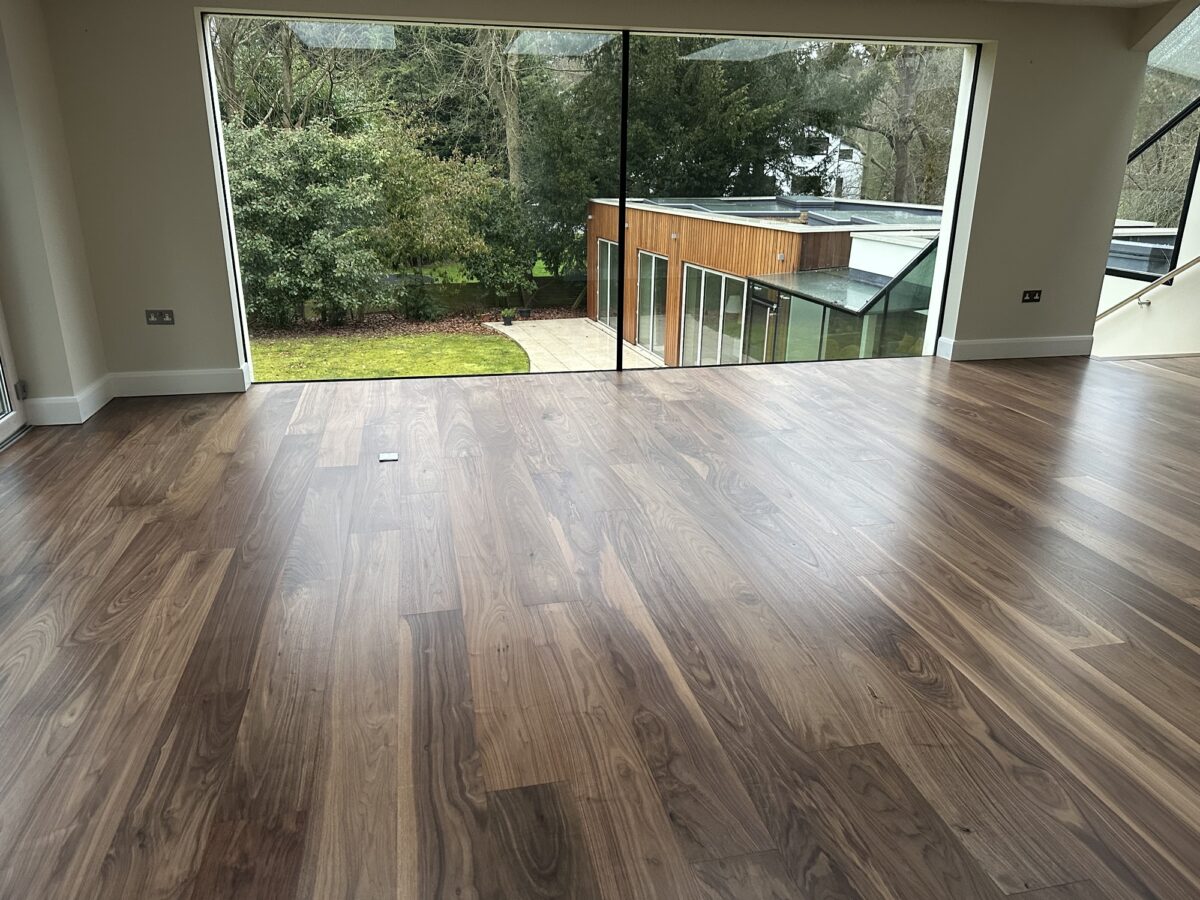
As you can see from the photos, the floor came out brilliantly. The walnut is rich, warm and consistent across the whole area. The client left us a five-star review, which you can see below.
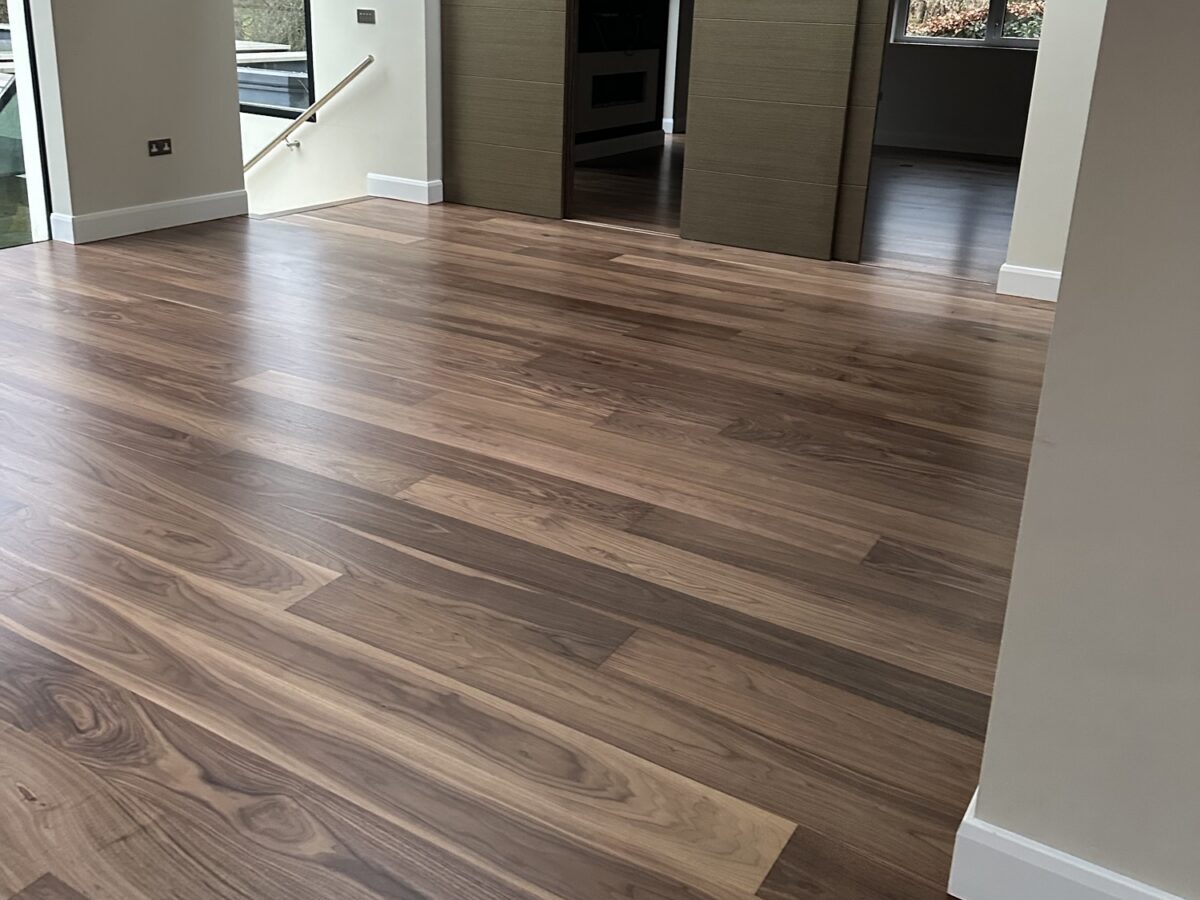
This job is a good example of what engineered wood floor sanding can achieve. A lot of people look at a floor in this condition and assume it needs replacing. It rarely does. A properly restored floor looks better than a new one in an older property, and costs a fraction of the price.
Need engineered wood floor sanding in Welwyn Garden City?
If you have an engineered wood floor that needs sanding and refinishing in Welwyn Garden City or the surrounding area, get in touch. Whether it is UV damage, general wear, or a finish that has given up, we can usually bring it back. We cover Welwyn Garden City and the surrounding Hertfordshire area.

Leave A Comment