
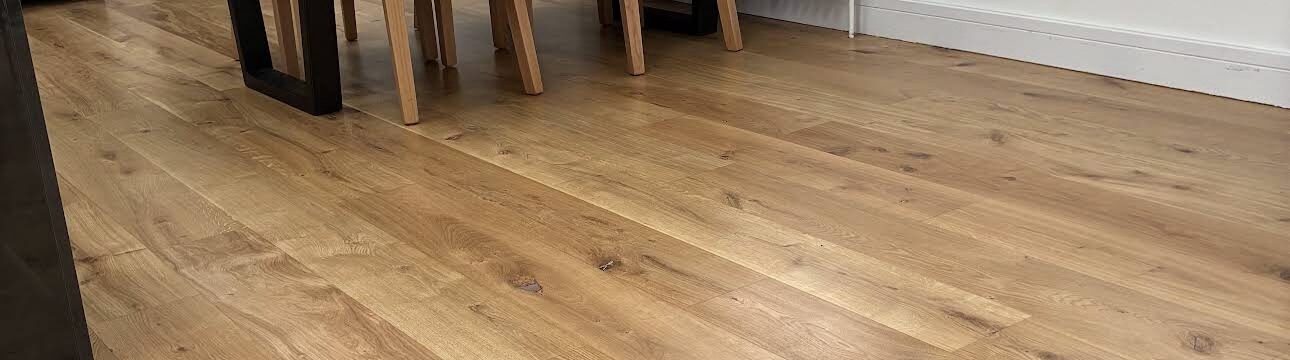
We recently completed an engineered wood floor sanding and refinishing project in St Albans, and it turned out to be one of the more satisfying jobs we’ve tackled this year. The floor had a factory-applied grey finish, a damaged board, and only 3mm of wear layer to work with. Because of that, there was very little room for error. Here’s how we brought it back to life.
A Tricky Start: A Delaminated Board
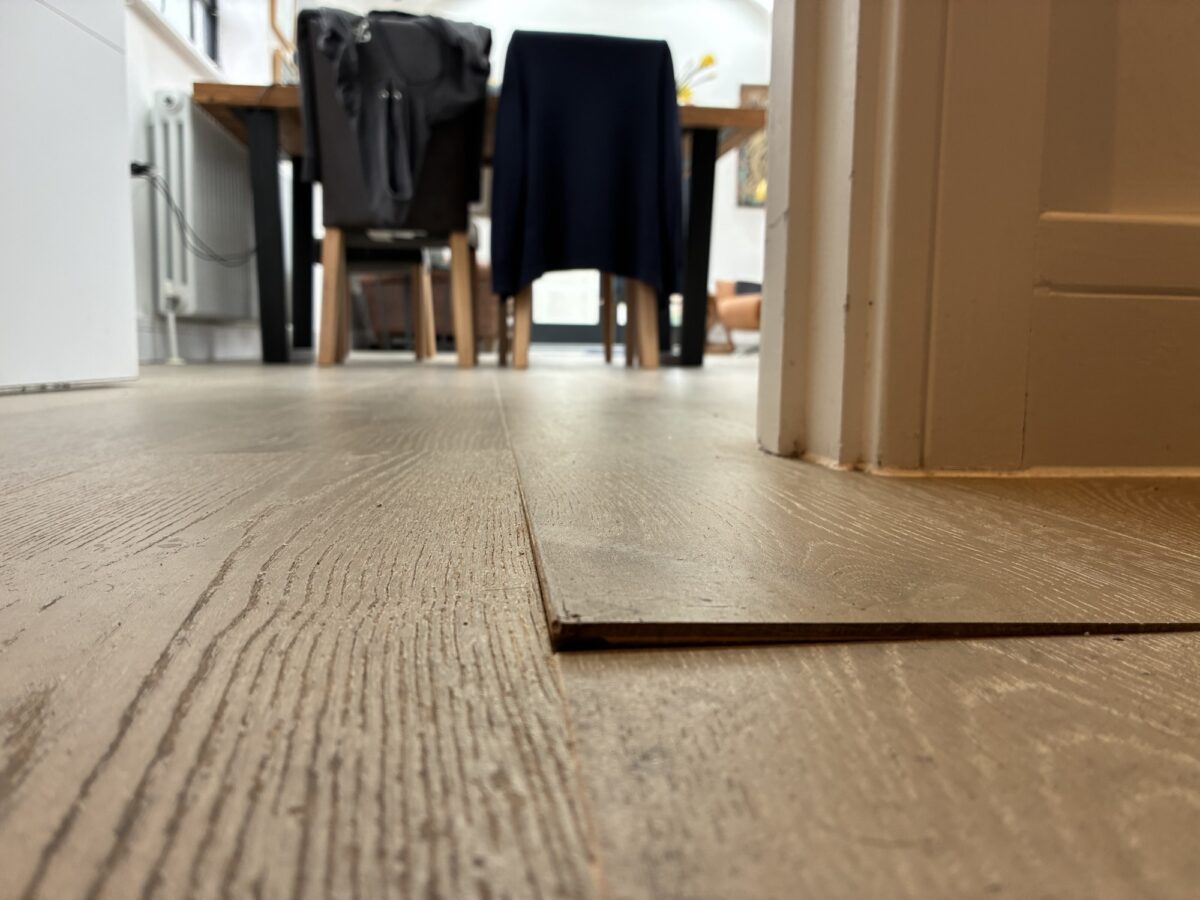
Before we could even think about sanding, we had a repair to deal with. One of the oak boards had delaminated, and the top layer was lifting and sticking up above the rest of the floor. With such a thin wear layer, we couldn’t simply sand it flat. Instead, we glued the board back down and pressed it firmly to get it as close to level as possible.
This step mattered more than usual. On a solid wood floor, a bit of extra sanding can often correct small imperfections like this. However, engineered boards don’t give you that luxury. Sand too aggressively in one spot, and you risk cutting straight through to the plywood base beneath. So we took our time, checked the level carefully, and made sure the repair sat as flush as it could before moving on.
Sanding Deep Without Sanding Through
The floor had been wire brushed at some point in its life, which meant dirt had worked its way deep into the open grain. Wire brushing looks great when it’s new, but it creates texture that traps grime over the years, and this floor had years of it embedded.
To get the floor clean, we had to sand more deeply than we would on a smooth board. That’s always a calculated risk on engineered wood, because every pass removes a fraction of an already-thin wear layer. We monitored the depth closely throughout the process and sanded in careful, controlled stages. In the end, we got the grain properly clean and stayed safely within the wear layer, all the way to the plywood substrate but not into it.
Removing the Grey: What We Found Underneath
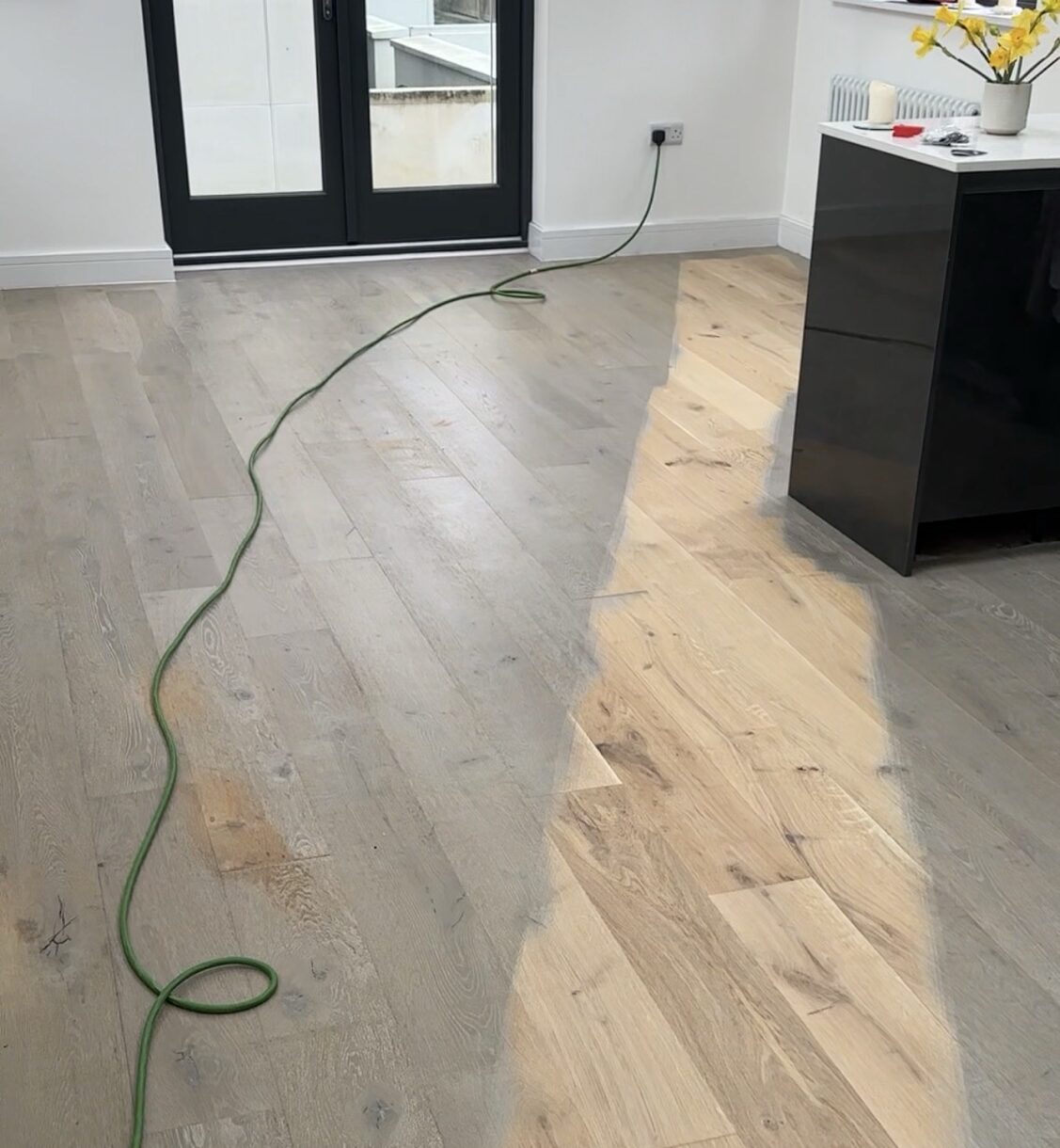
The floor had a factory-applied opaque grey finish, and honestly, we weren’t sure what we’d find beneath it. Solid, opaque colours on engineered floors sometimes hide a cheaper, lower-grade timber, since the manufacturer knows the wood grain will never be visible through the paint-like finish. It’s a gamble every time we take one back to bare wood.
This time, though, the gamble paid off. Once we sanded through the grey, the oak underneath was genuinely beautiful. The grain was rich, varied, and full of natural character, exactly the kind of result that makes this job so rewarding.
Why Grey Floors Are Losing Their Appeal
Grey wood flooring had a long run as one of the most popular finishes in UK homes, but that trend is fading. We’re seeing fewer requests for it, and more homeowners asking us to bring back the timber’s natural tone instead.
Part of the reason is simple. Even in a home with a greyscale colour scheme, a grey floor can end up looking flat and washed out. Because the floor sits underneath everything else in the room, it sets the tone for the whole space. When you let the natural warmth and grain of the oak wood come through, it adds depth and life that a flat grey finish simply can’t match, even if the walls and furnishings stay neutral.
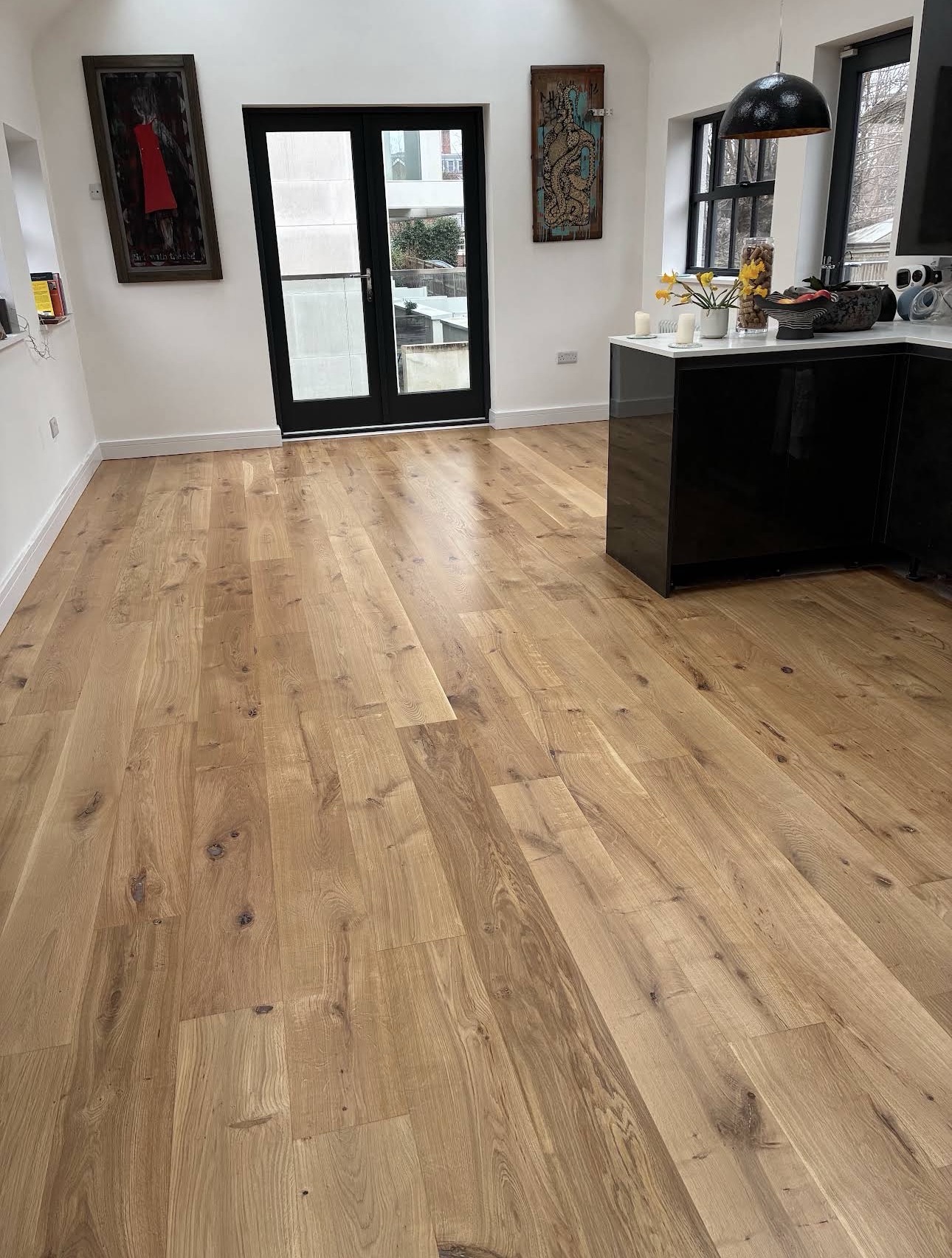
That’s exactly what happened in this St Albans home. The finished floor brought a warmth to the room that the original grey finish never had, and the client was thrilled with the transformation.
The Finish: Loba PrimaSeal and Loba EasyFinish
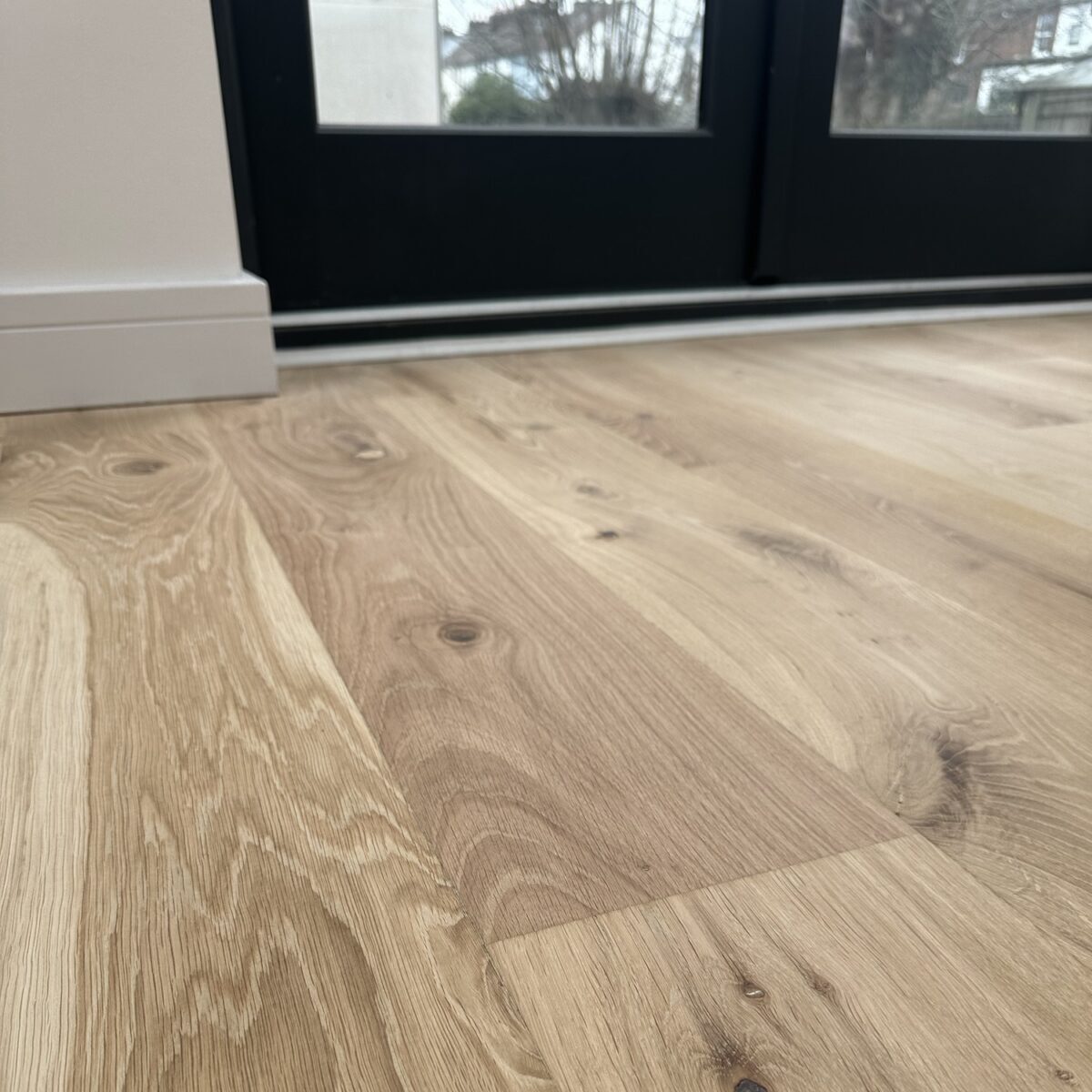
For the final coats, we used Loba PrimaSeal as a base, followed by Loba EasyFinish as the topcoat. We rely on this combination often because it delivers a durable, natural-looking result that holds up well to everyday family life.
PrimaSeal acts as a high-quality sealer, locking down the grain and creating a stable, even base for the topcoat. EasyFinish then builds a hard-wearing, low-sheen surface that enhances the wood’s natural colour rather than masking it. Together, they gave this St Albans floor a finish that looks warm, authentic, and built to last for years to come.
The Result
This project is a good example of why engineered wood floor sanding and refinishing needs real care and experience, especially when the wear layer is thin. Between the delaminated board, the deep-set dirt from wire brushing, and the uncertainty of what lay beneath that grey finish, there were several points where things could easily have gone wrong.
Instead, careful, methodical work turned a tired, damaged grey floor into a warm, natural oak floor the client will enjoy for years. If your engineered wood floor in St Albans, or anywhere else in Hertfordshire, needs sanding and refinishing, we’d love to help.
Engineered Wood Floor Sanding and Refinishing in St Albans: Get in Touch
If you’re considering engineered wood floor sanding and refinishing for your own home in St Albans, get in touch with Osborne Woodcare. We’re happy to visit, assess your floor’s wear layer, and talk through what’s realistically achievable before any work begins. Every engineered floor is different, so an honest assessment upfront always makes for the best result.

Leave A Comment